

 Calender


Feature Exhibition
Feature Exhibition
Treasures of Tōdaiji’s Omizutori Ritual
This Feature Exhibition offers an introduction to the history and traditions of the Omizutori shuni’e ritual conducted every year in the first two weeks of March at the Nigatsudō Hall at Tōdaiji Temple, gathering related works of sculpture, painting, historical documents, decorative arts, and archaeological findings. It has been held at the Nara National Museum every year since 1997 (Heisei 9) to great acclaim. The Omizutori ritual encompasses practices and rites shaped over the course of its long history. These are imbued with characteristics of the cultural and religious contexts in which they developed, among them the syncretic faith in deities of the Buddhist pantheon and kami worship referred to as Shinbutsu Shūgō. Largely inaccessible to the public, many practices and elements of Omizutori are shrouded in mystery; we hope that visitors will be able to gain a deeper understanding of its rites and traditions through this exhibition.
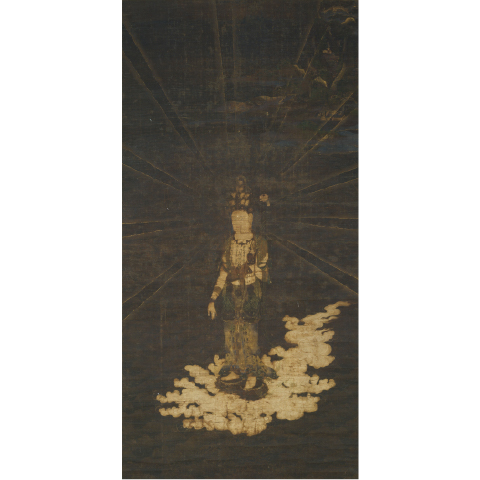
Eleven-headed Kannon (Sk. Avalokiteśvara)
Kamakura period, 13th century
Tōdaiji Temple, Nara
About the Omizutori Ritual
The actual name of the Omizutori ritual, which is held at the Nigatsudō Hall of Tōdaiji Temple each year, is the “Shuni’e.” It is a Jūichimen Kannon Keka repentance ceremony conducted with the Hall’s Eleven-Headed Kannon (Sk. Avalokiteśvara) as its principal icon. Prayers for prosperity and the aversion of disaster are offered alongside the confession of past transgressions at the heart of the repentance retreat. The Omizutori is renowned in part for its long history: it was first established in 752 (Tenpyō Shōhō 4) by the priest Jitchū. It has been observed without fail for the 1,270 years since, even through many disasters and periods of precarity, from the burning of Nara’s great temples by troops of the Taira clan in the late twelfth century; during the many calamities of the Warring States period from the fifteenth to sixteenth centuries; and, more recently, through the aerial bombings of the war. Its being held without fail for its entire history is the reason Omizutori is sometimes called the “Unceasing Rite.” It is certainly one of the foremost examples of living cultural heritage in Japan.
Dates
Saturday, February 7th to Sunday, March 15th, 2026
Holidays
The Museum is closed on Monday, February 16th and Tuesday, February 24th.
However, the Museum is open on the following Mondays: February 9th, February 23rd, March 2nd, and March 9th.
Hours
9:30 a.m. to 5:00 p.m.
※Last admission is thirty minutes before closing.
※During the periods of Nara Rurie (February 8th to 14th) and Omizutori ritual (March 1st to 11th, 13th, and 14th), the Museum is open every day until 6:00 p.m., and until 7:00 p.m. on March 12th, the day of the Kago Taimatsu.
※Please note that temporary closure dates may be subject to change.
Venue
The West New Wing of the Nara National Museum
Admission
| General Admission | College Students |
|---|---|
| ¥700 | ¥350 |
- Free of charge entry to disabled certificate holders and an accompanying caretaker (upon presenting the certificate).
- Free of charge entry to high school students and below; those under the age of 18; those 70 and above.
- For university and high school students, please bring your student ID.
- For those bringing along with them a guest who is a high school student or under and/or under the age of 18, please enjoy a 100 yen discount on general admission and 50 yen discount on university students admission.
- Admission includes entry to the Exhibitions from the Permanent Collection “Masterpieces of Buddhist Arts” (West New Wing), “Masterpieces of Buddhist Sculpture” (Buddhist Sculpture Hall) and “Chinese Ancient Ritual Bronzes” (Ritual Bronzes Gallery).
Organizers
The Nara National Museum, Tōdaiji Temple, NHK Broadcasting Nara Station
With the Cooperation of:
Bukkyō Bijutsu Kyōkai (Buddhist Art Foundation)
Through Corporate Partnership with:
DMG MORI Co., Ltd.
Featured Items:
Important Cultural Property
Eleven-headed Kannon (Sk. Avalokiteśvara)
[Tōdaiji Temple, Nara]
Kamakura period, 13th century
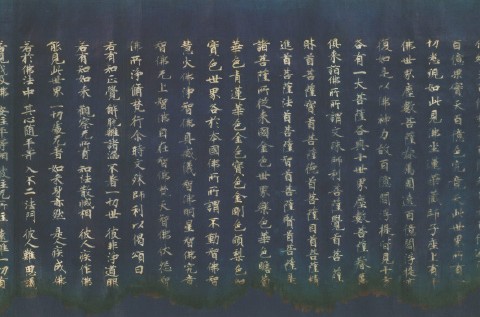
Kegon-kyō (Sk. Avataṃsaka-sūtra) (also known as Nigatsudō Yakegyō)
[Nara National Museum]
Nara period, 8th century
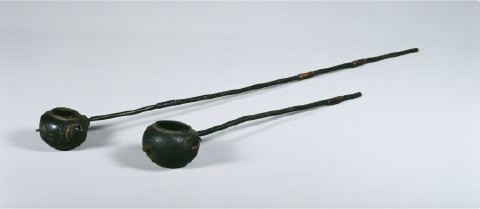
Important Cultural Property
Sacred Water Ladles
[Tōdaiji Temple, Nara]
Top: Kamakura period, 1255 (Kenchō 7)
Bottom: Kamakura period, 1253 (Kenchō 5)
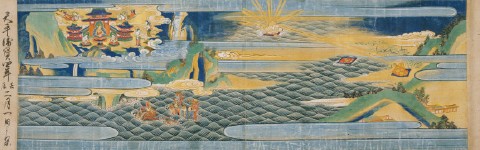
The Illustrated Legends of the Nigatsudō Hall
[Tōdaiji Temple, Nara]
Muromachi period, 1545 (Tenbun 14)
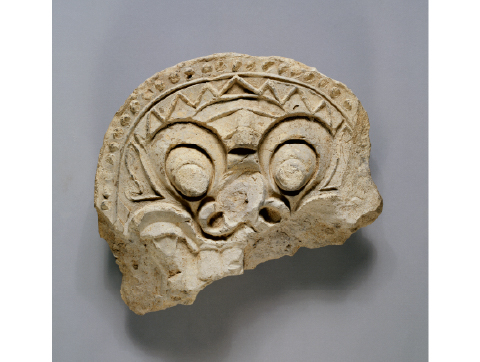
Roof ridge-ornament (onigawara) with goblin face design
[Tōdaiji Temple, Nara]
Nara period, 8th century