

 Calender


Feature Exhibition
Feature Exhibition
Masterworks of the SEN-OKU HAKUKOKAN MUSEUM
Sacred Forms Cherished by Sumitomo Shunsui
Sumitomo Kichizaemontomito (1864–1926), also known as Shunsui, was a fifteenth-generation member of the prominent Sumitomo family. The SEN-OKU HAKUKOKAN is a museum dedicated to the preservation, research, and exhibition of art treasures centered around his collection. The museum’s 3,500 works encompass ancient Chinese bronzes, Chinese and Japanese calligraphy, Western paintings, modern-period ceramics, utensils and wares from the contexts of both the tea ceremony and the scholar’s studio, masks and costumes of the Nō performance tradition, and various other categories. While the Kyoto museum is closed to the public for renovations through Spring 2025, visitors are welcome at its original Kyoto location in Shishigatani and at the museum’s Tokyo branch.
This exhibition is held with the full cooperation of the SEN-OKU HAKUKOKAN. It highlights the ancient Chinese bronze masterworks for which the Sumitomo collection is particularly renowned as well as works of Buddhist art selected by Shunsui and reflecting his unparalleled aesthetic eye. The show brings together objects of the sacred sphere from ancient China and Buddhist practice, among them icons enshrined at temples and ritual implements used in religious ceremonies. It features a collection grounded in the sincere passion for art and culture that Sumitomo Shunsui pursued throughout his life alongside his illustrious career in industry and commerce. We hope you will gain a sense of the interest he took in works shaped by faith and prayer.
(The SENOKU HAKUKOKAN MUSEUM, Kyoto)
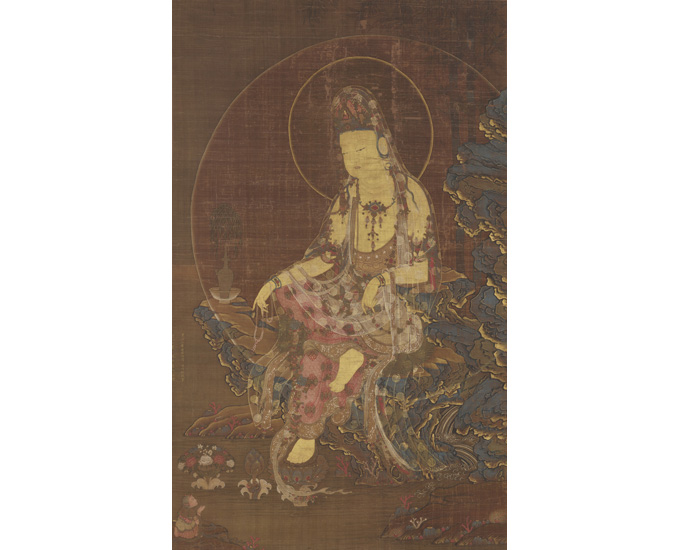
Water Moon Gwaneum (Skt. Avalokiteśvara)
By Seo Guban
(The SENOKU HAKUKOKAN MUSEUM, Kyoto)
Dates
Saturday, July 20th to Sunday, September 1st, 2024
The museum is closed on Mondays, but it will be open on August 5th and August 12th.
Venue
The East New Wings of the Nara National Museum
Museum Hours
9:30 a.m. to 5:00 p.m.
Last entry is thirty minutes before closing.
*From August 5th to 14th, during the Nara Tōkae, the museum will be open until 6:00 p.m.
*On August 15th, during the Chugen Mantoro, museum will be open until 7:00 p.m.
Admission
| General | 700 yen |
| University Students | 350 yen |
- High School Students and below; those under the age of 18; those 70 and above: free
- For those bringing along with them a guest who is a high school student or under and/or under the age of 18, please enjoy a 100 yen discount on admission. Likewise, those bringing along a university student can enjoy a 50 yen discount.
- Admission includes entry to the Feature Exhibition “Exploring Art The Wonders of Japan’s Gods and Goddesses” in the West New Wings and the Exhibitions from the Permanent Collection “Masterpieces of Buddhist Sculpture” and “Chinese Ancient Ritual Bronzes.”
Organizers:
The Nara National Museum
Through Cooperation with:
The SENOKU HAKUKOKAN MUSEUM
Through Corporate Partnership with:
DMG MORI Co., Ltd.
With the Cooperation of:
The Nara City Board of Education and the Association of Buddhist Art (Bukkyō Bijutsu Kyōkai)
Featured Items:
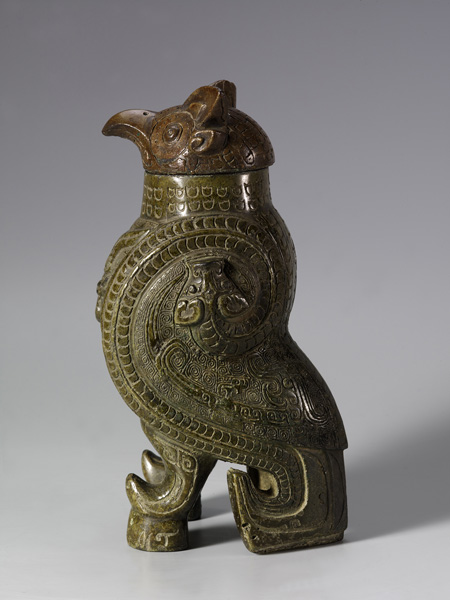
[The SENOKU HAKUKOKAN MUSEUM, Kyoto]
China, Yin period, 13th–12th century BC
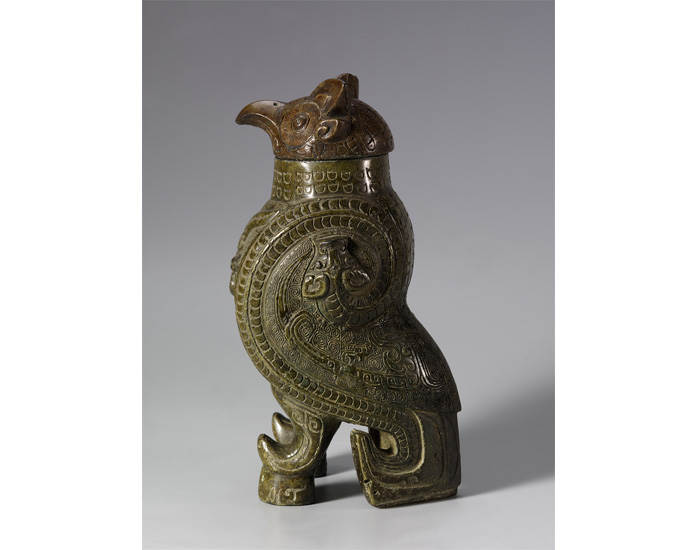
This wine vase (Chinese: zun) is shaped like an owl, with the body serving as the vessel portion that stored liquid and the head serving as the lid. It is very unusual, with only a few like it in existence. Vessels shaped like owls were popular during the Shang dynasty.

By Seo Guban
[The SENOKU HAKUKOKAN MUSEUM, Kyoto]
Korean peninsula, Goryeo dynasty, dated 1323
During the Goryeo dynasty, refined and impressive Buddhist paintings were created by artists affiliated with the royal court. This image depicts the bodhisattva Avalokiteśvara seated on a rocky outcrop at their Mount Potalaka abode being visited by the young acolyte Sudhana. A signature and seal at the left edge of the painting reveal the name of the artist and the date of production.
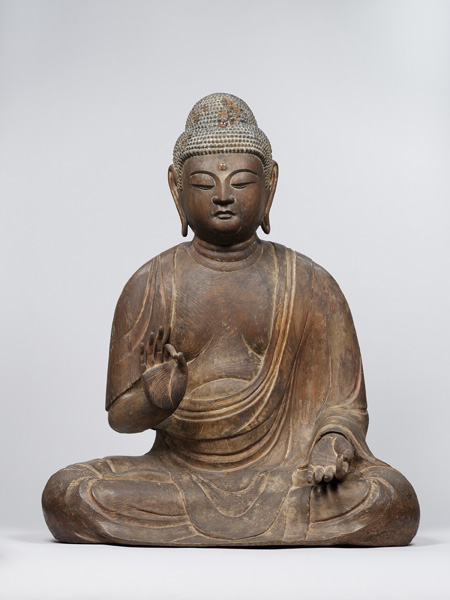
[The SENOKU HAKUKOKAN MUSEUM, Kyoto]
Heian period, dated 1130
This statue was produced according to the elegant style established by the Buddhist sculptor Jōchō during the eleventh century, known as the Jōchō style. However, the face was repaired at a later date. The year and a list of the names of devotees who contributed to the production of the statue, including many women, are inscribed inside it. The statue was acquired in 1933 by Sumitomo Kan’ichi, the son of Shunsui.
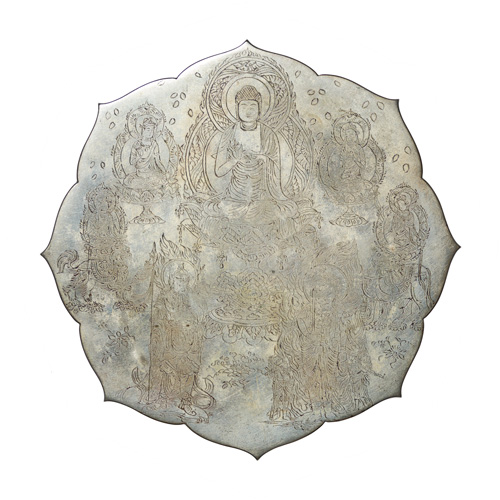
[The SENOKU HAKUKOKAN MUSEUM, Kyoto]
Heian period, 12th century
This bronze mirror is engraved with images of Buddhist deities on its mirrored surface. Great skill was employed in the flowing, delicate hairline engraving and the use of perspective to depict deities surrounding a central Buddha figure. Research in recent years has revealed that the mirror is connected to Mount Daisen in Tottori Prefecture.