


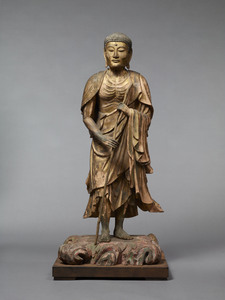


After six years of ascetic practices, the Buddha Śākyamuni came down from the mountains having realized the futility of this path to enlightenment. Here we see his emaciated form borne of those austerities. This iconography is prevalent in Zen contexts, one widespread in paintings but rare in sculpture. The statue is thought to have been the principal image of worship at the Jōdōe, a ritual commemorating Śākyamuni’s awakening.
IWAI TomojiEnglish by Mary Lewine
Buddhist Art Paradise: Jewels of the Nara National Museum. Nara National Museum, 2021.7, p.352, no.5.
The founder of Buddhism, Śākyamuni was said to have practiced asceticism for six years and left the mountain after he realized nothing of torturing own body. This statue was actualized based on this story, it was vividly expressed with sunken cheeks and rawboned body.
Yasuo Inamoto
Masterworks from the Nara Buddhist Sculpture Hall at the Nara National Museum. Nara National Museum, 2010, p.142, no.124.